
Okay, so check this out—I’ve been poking around exchanges for years, and the login process still surprises me sometimes. Wow! It’s weirdly personal. My instinct said “keep it simple,” but then reality pushed back: between wallets, futures, and the usual security hoopla, nothing’s ever just one click. Seriously?
First impressions matter. When I sign into an exchange like okx, I want speed and confidence—no fiddly bits. Initially I thought the UX would be the main friction point, but then I realized security policies and account linking are often the real blockers. On one hand, you want two-factor auth and device verification; though actually, those protections sometimes turn into a multi-hour sprint when your phone dies and you forgot backup codes. Hmm… that bugs me.
Let me give you the practical route I use when logging into OKX: quick checklist first, then we’ll unpack each step. Short version: email/phone verification, password, 2FA (authenticator or SMS), device confirmation, and optionally wallet connect for on-chain moves. Small tangent—oh, and by the way, if you’re only here for futures trading, you still need the same identity and security groundwork. Keep reading, there’s nuance.
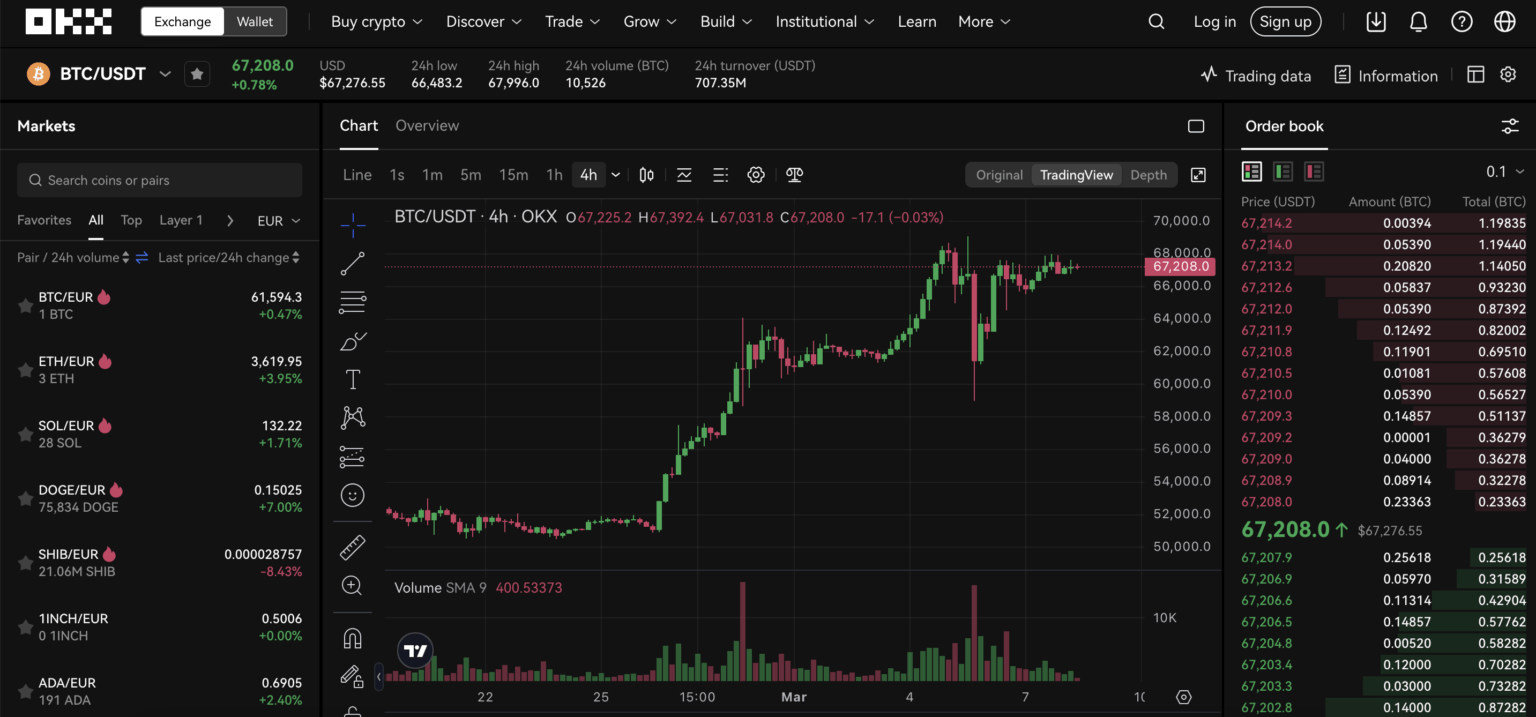
How I approach OKX sign in (and why it saves time)
Step 1: prep. Seriously, do this before you need to trade. Write down backup codes. Keep a clean authenticator app. My gut says—don’t be cavalier—because when a fast-moving market opens up, you want sign-in to be a non-event. Really.
Step 2: primary auth. Email or phone gets the initial challenge. If you use phone-based SMS 2FA, it’s quick but less secure. Authenticator apps (Google Authenticator, Authy) are better. I’m biased toward authenticator apps because they’re offline and faster when cell service is spotty, but I’m not 100% convinced everyone will keep set-up notes—so, backup codes are very very important.
Step 3: device trust and verification. OKX will often ask to trust the device or verify via email. My approach: only trust devices you control. Initially I thought “trust everything,” but nope—don’t do that. Actually, wait—let me rephrase that—trust selectively, especially if you use a shared workstation, or travel a lot.
Step 4: secondary account security (withdrawal password, API keys). If you trade futures, you’ll likely use API keys for bots or algos. Keep separate API keys for futures with permission scopes limited. On one hand, giving a bot full withdrawal permissions is convenient; on the other hand—well, you get it—don’t. My instinct said “automation is king,” and then reality said “guard the keys.”
Here’s a practical scenario: you’re logged out, markets swing, you try to sign in, but your authenticator app is on a different device that’s updating. Ugh. That happens to the best of us. Quick trick: keep a printed copy of backup codes in a secure place (safely hidden), or use a hardware key if OKX supports it for added security. I’m not 100% sure about hardware-key support across all OKX account types, but it’s worth checking ASAP.
OKX wallet vs. exchange custody — what to expect at login
Small story: I once logged into an exchange thinking I controlled my funds, only to find a misunderstanding about custody. That moment was a wake-up call. Your OKX wallet (on-platform custodial wallet) is different from a self-custody external wallet. When you sign in, you access the custodial balances tied to your account. If you want to use an external wallet (for DeFi or layer-2 moves), you’ll often sign in via WalletConnect or similar tooling after account sign-in.
There’s a flow: platform login → account security checks → wallet connect if you want on-chain actions. Each step could require re-authorization. Honestly, this part bugs me when it’s slow. But OKX needs those checks so your futures positions and on-chain transfers don’t get hijacked mid-flight.
Pro tip: separate accounts mentally. Keep your spot trading and long-term holdings in different places—some on OKX custodial for active trading, some in cold/self-custody. My instinct told me to consolidate years ago; my experience said diversification of custody reduces stress.
Futures access—extra gates and why they exist
Futures trading usually requires additional verification and sometimes a test knowledge check. That’s not theatre, it’s risk management. On one hand, it’s annoying—yes, it slows you down when you want to hedge. On the other, it prevents novice mistakes that can cascade into real financial loss. Initially I thought exchanges used those checks to be annoying. Turns out there’s a logic: leverage changes the risk profile and platforms try to ensure users understand margin mechanics. Hmm.
If you plan to trade OKX futures, set up and verify everything ahead of time: KYC, transfer permissions, margin account enablement, and ensure your API keys (if applicable) are restricted properly. Something felt off about some bots I’ve seen that had overly broad API permissions—don’t repeat that. Also, keep an eye on leverage settings; defaults can be too aggressive.
Common questions traders ask about OKX sign in
What if I lose access to my authenticator app?
First—don’t panic. If you saved your backup codes, use those. If not, prepare for a support ticket with identity verification; that can take time. My experience: start the recovery process early (don’t wait until you desperately need to trade). Oh, and by the way, don’t post your codes anywhere—ever.
Can I use OKX without completing KYC?
Partially—some spot features may be available with limited functionality, but for withdrawals above thresholds and futures access you’ll need KYC. Initially I underestimated how much KYC would gate derivatives access—lesson learned. Keep your documents handy to speed the process.
Is using SMS-based 2FA okay?
It’s acceptable but not ideal. SMS can be intercepted or SIM-swapped. If you want stronger protection, use an authenticator app or a hardware key (if supported). My recommendation: SMS for convenience, auth app for serious traders. I’m biased, but security over convenience usually pays off.
Alright, closing thought—this felt like a lot, and it kinda was. But here’s the takeaway: prep, verify, and separate custody when possible. Your login should be a quick gate, not a full-blown obstacle course. Something to keep in mind next time you open a trade at 2 a.m.—you want sign-in to be the least of your problems.